
The right lubricant depends on what else is in play: a silicone ring, a condom, water, or skin that reacts to things. Water-based is the answer more often than not, mostly because it is compatible with everything, and silicone wins clearly in two situations.
We sell one lubricant, which makes this a short roundup and an honest one. Where a specialist brand is the better answer, that is what this page says.
By situation
| Situation | Use | Why |
|---|---|---|
| With a silicone ring, sleeve or toy | Water-based | Silicone lube degrades silicone on repeated contact |
| In the shower or bath | Silicone | Water-based washes away in seconds |
| Long solo session, no silicone gear | Silicone | One application, no reapplying |
| With latex condoms | Water-based or silicone | Never oil |
| Sensitive skin or a history of irritation | Simple unscented water-based, glycerin-free, or silicone | Fewer ingredients, less to react to |
| Sheets you care about | Water-based | Rinses out; silicone can mark |
| One bottle for everything | Water-based | The compatibility argument wins |
With a silicone ring
Water-based, without much argument. Every ring in the lineup is silicone, and silicone lubricant softens the surface over repeated exposure until it goes tacky and then gummy. The mechanism is in silicone lube with silicone toys .
Beyond compatibility, lube is what makes a ring pleasant rather than a wrestle. A little inside the ring and a little on the shaft turns getting it on into a roll, and removal into something you do at the 30-minute mark rather than postpone. That habit does more for ring comfort than any other single thing. How to use a penis ring has the routine.
In the shower
Silicone, and nothing else. Water-based lube is gone in seconds under running water, and adding more does not help because the water is doing the same thing again. Silicone stays where you put it.
The cost is a genuinely slippery floor and soap-only cleanup. Neither is a reason to avoid it, and both are a reason to think about where you are standing.
With condoms
Either water-based or silicone. Both are compatible with latex, polyisoprene and polyurethane.
Oil is the rule with real consequences: oil-based products degrade latex and cause condom failure, and that includes coconut oil, petroleum jelly, baby oil, massage oils and hand lotion. Avoid nonoxynol-9 as well, which is a spermicide sometimes added to lubricants and which damages epithelial tissue with repeated use. Lube and condom compatibility is the full page on it.
A useful trick nobody mentions: a few drops of lube inside the tip of the condom before rolling it on makes a noticeable difference to sensation, which matters if condoms are part of why erections fade.
For sensitive skin
Start with the simplest water-based formula you can find: unscented, glycerin-free, no warming or tingling agents, short ingredient list. If that still irritates, silicone is worth trying, because it is chemically inert and sits on the surface rather than interacting with tissue.
The underlying variable is usually osmolality. Body tissue sits around 280 to 300 mOsm/kg, and lubricants well above that pull water out of the cells they touch, which irritates tissue and can damage the epithelial layer. The WHO has published guidance recommending lubricants stay within a defined range, and a lot of popular products sit well outside it.
Most manufacturers do not publish the figure. When one does, that is informative in itself.
Where we do not win
We sell one 4 oz lubricant. A dedicated lubricant brand sells eight, in four sizes, and some of them do things this one does not.
Published osmolality. Brands that build their positioning around formulation — Good Clean Love publicly positions its products on isotonic formulation, for instance — publish figures we do not. If you have had recurring irritation and want to buy on that number, buy from someone who prints it.
Sensitive-skin ranges. Sliquid publicly positions its range on glycerin-free and paraben-free formulations across several products. If your skin has already told you what it dislikes, a brand with a range built around exclusions is an easier place to shop than a brand with one product.
A dedicated silicone option. Uberlube publicly positions itself as a short-ingredient silicone lubricant. We do not sell a separate silicone product, so if the shower is the use case, that is a gap in our lineup rather than a gap in the market.
Bulk sizes. If you go through lube quickly, 4 oz is not the economical format and there are 8 and 16 oz options elsewhere.
None of that is a reason to skip the ingredient panel wherever you buy. Marketing language in this category runs well ahead of formulation.
What we do sell
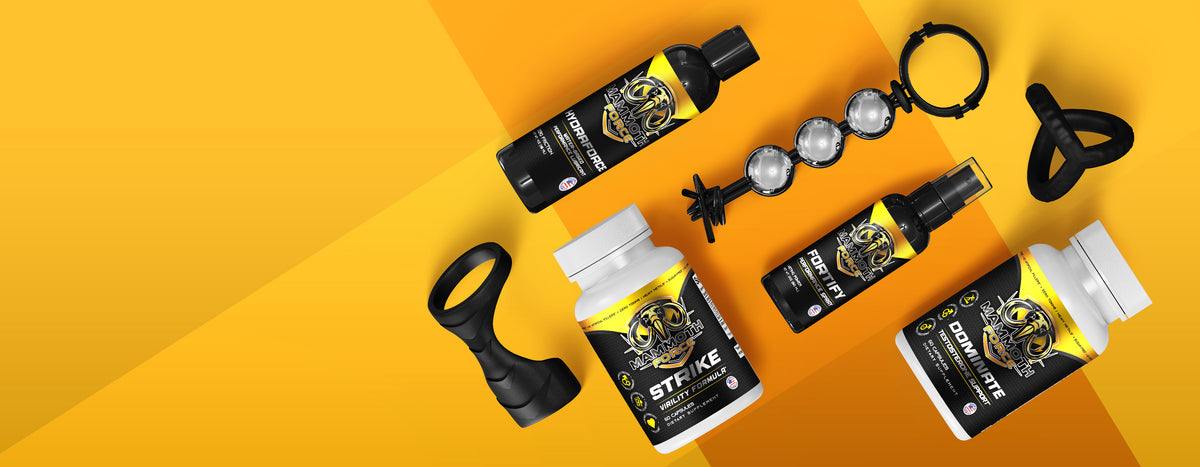
HydraForce is a 4 oz personal lubricant with a pump, formulated for low friction and everyday use, at $24.95. It is the item most often bought alongside a ring, because that is the pairing where lube stops being optional.

Mammoth Force
HydraForce Lubricant
4 oz water-based lube. Store says glycerin-free and silicone-safe.
4.6 from 15,000+ reviews
Free shipping over $50 • Discreet packaging • Ships from Huntington Beach, CA
The base is not stated on this page deliberately: check the ingredient panel on the product page for the current formulation before buying, particularly if silicone-toy compatibility or a known sensitivity is the deciding factor for you. Getting that from the panel rather than from us is the right way round.
What to skip
Warming and tingling formulas. The effect is usually produced by an ingredient that works by irritating tissue, and irritation is what most complaints about lube turn out to be.
Anything with nonoxynol-9. Epithelial damage with repeated use and increased infection risk. There is no upside here worth the trade.
Oil with latex. Not a preference. A failure mode.
Saliva. Dries in seconds, provides no useful glide, and is not doing anything for infection risk either.
Anything scented. Fragrance is a common irritant and does nothing you need.
How much you actually need
Most people use too little, then conclude that lube does not do much.
A reasonable starting amount is a coin-sized pool rather than a few drops, reapplied when the glide goes rather than when it has gone. Water-based lube that has turned tacky reactivates with a few drops of water more effectively than with more product on top, which is worth knowing before you buy a bigger bottle than you need.
A 4 oz bottle is a sensible size for most people, because lubricant does age and a 16 oz bottle bought on price frequently goes off before it runs out. Check the expiry, keep the bottle out of heat and sunlight, and replace anything that has changed colour, separated, or started to smell.
One-handed dispensing decides whether you reach for the bottle a second time. A pump beats a flip cap, and a flip cap beats a screw cap, and that ranking becomes obvious at the exact moment you cannot test it.
What to read next
- Water-based vs silicone lube
- Lube and condom compatibility
- How to clean silicone toys
- The complete lube guide
- Personal lubricant