
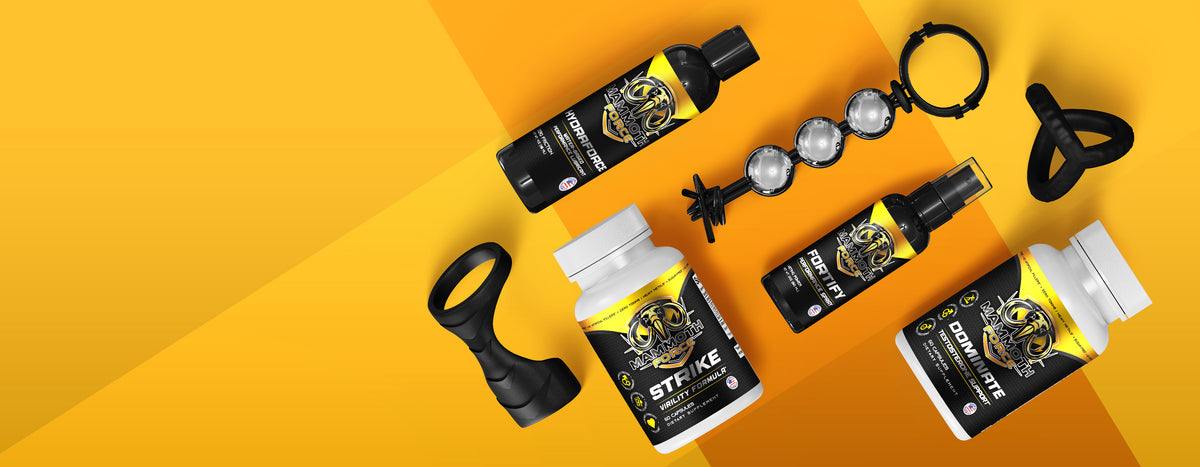
Warm water and mild unscented soap after every use, a full rinse to get the soap off, and a complete dry before it goes away. That covers a silicone ring, a sleeve, or a toy, and it takes under a minute.
Nearly everything that goes wrong with silicone gear comes from one of two things: putting it away damp, or using silicone lubricant on it. The first grows something; the second dissolves the surface.
The routine
- Rinse immediately after use with warm water, before anything dries onto the surface. This is the step that makes the rest easy.
- Wash with mild unscented soap. Hand soap or a fragrance-free body wash is fine. Fragranced and antibacterial soaps leave residue that irritates skin later.
- Work into the texture. Ridges, seams and the inside of a sleeve are where residue actually sits. A soft cloth or a clean soft brush helps on textured items.
- Rinse thoroughly. Soap residue on a ring worn against skin for 30 minutes is a common and avoidable source of irritation.
- Dry completely. Air dry on a clean towel until there is no moisture anywhere, including inside a sleeve.
- Store dry, separate, out of sunlight. Silicone against silicone reacts over months, so individual bags or compartments.
Do the same wash before the first use of anything new. Manufacturing residue is real and it is easier to remove than to reason about.
What sterilises and what does not
| Method | Works on | Notes |
|---|---|---|
| Soap and warm water | Everything | The routine. Sufficient for personal use |
| Boiling, 3–5 minutes | Solid, non-motorised, 100 percent silicone | Not for motors, batteries, glued seams or mixed materials |
| Dishwasher top rack, no detergent | Some solid silicone | Manufacturer-dependent. Check first |
| 10 percent bleach solution | Solid silicone, non-porous | Disinfects, needs a very thorough rinse, rarely necessary |
| Isopropyl alcohol | Wiping down non-porous surfaces | Dries and clouds silicone over time. Not a routine |
| Toy cleaner sprays | Convenience | Mostly a surfactant. Soap does the same job cheaper |
| Boiling a porous item | Nothing useful | Cannot sterilise below a porous surface |
For a personal item used by one person, soap and water after every use is genuinely enough. Sterilisation becomes worth the effort when an item is shared between partners, when it has been stored badly, or after an infection. Sharing without a barrier is the situation where a porous item is a real problem rather than a theoretical one.
Never boil a motor
Anything with a battery, a motor, a charging port, or glued seams gets a wipe-down instead: soapy cloth, damp cloth, dry cloth, keeping water away from the port. That covers most vibrating items, including Trigger and Pulse .Porous versus non-porous
This decides how careful you have to be.
Non-porous. 100 percent silicone, glass, stainless steel, ABS plastic. The surface is sealed, so soap and water reaches everything there is to reach, and these materials can be genuinely cleaned.
Porous. TPE, TPR, jelly, PVC, elastomer blends, and most cheap sleeves. Microscopic openings across the surface hold moisture and bacteria where soap does not reach. They cannot be sterilised, they have a limited life, and a condom over them is the sensible answer if they are shared at all.
Silicone that has been degraded by silicone lubricant crosses from the first list to the second. That is the reason the compatibility rule matters beyond the cosmetic damage, and silicone lube with silicone toys explains how it happens.
Manufacturers are not always precise about materials, and several items in the Mammoth Force lineup have their material listed as unconfirmed pending verification with the brand. Check the product page before assuming, and when the material is unclear, treat it as porous and replace it sooner.
Sleeves and strokers need more attention
The interior is the whole job, and it is the part you cannot see. Rinse it through immediately, wash the inside properly, rinse again, and give it real drying time. Several hours, not twenty minutes.
Open-ended designs are far easier to clean and dry than closed ones, which is a practical argument for them. Cyclone and Titan Trainer are both open-ended sleeves. Some sleeves are finished with a light dusting of cornstarch-based renewal powder after drying to keep the surface from getting tacky; check what the manufacturer recommends rather than reaching for talc.
Damp storage is how a sleeve develops a smell and then a problem. If it smells of anything after cleaning, it was not dried properly or it has reached the end of its life.
Rings
A constriction ring is the easiest item in this category to look after, because it is a solid silicone loop with nowhere for anything to hide. Wash it before the first use and after every use afterwards, rinse the soap off properly, and dry it fully.
The one thing to add is a look at the surface before each use: any tear, split or tacky patch means it goes in the bin. A ring that fails while it is on is exactly the situation the 30-minute limit and the blunt-nosed scissors exist for. How to clean a cock ring covers the ring-specific version, and the sizing guide is where to go if the fit has drifted.
When to replace
- The surface is tacky when clean and dry
- It feels gummy or soft under light pressure
- There is a tear, split or nick anywhere
- The colour has gone blotchy or dull in patches
- It holds a smell after a proper wash
- It has been stored damp for a long time
None of these are repairable. Replacing a $25 to $40 item is the correct response to any of them.
Storage
Cleaning well and then storing badly wastes the cleaning.
Store everything completely dry. Damp is the single most common cause of a sleeve that develops a smell, and it happens in a drawer over days rather than in an obvious way.
Store silicone items separately from each other. Silicone against silicone reacts slowly even without lubricant involved, and two rings left touching for a year can end up marked or bonded. Cloth bags, individual pouches, or separate compartments all work; a shared plastic box does not.
Keep everything out of direct sunlight and away from heat, both of which degrade silicone over time, and away from anything with a strong smell, because silicone picks up odours and does not readily give them back.
A drawer with a cloth bag per item, dry, dark and cool, is the entire storage system. It costs nothing and it roughly doubles how long things last.
What to read next
- Silicone lube with silicone toys
- Water-based vs silicone lube
- The complete lube guide
- Strokers and performance trainers