
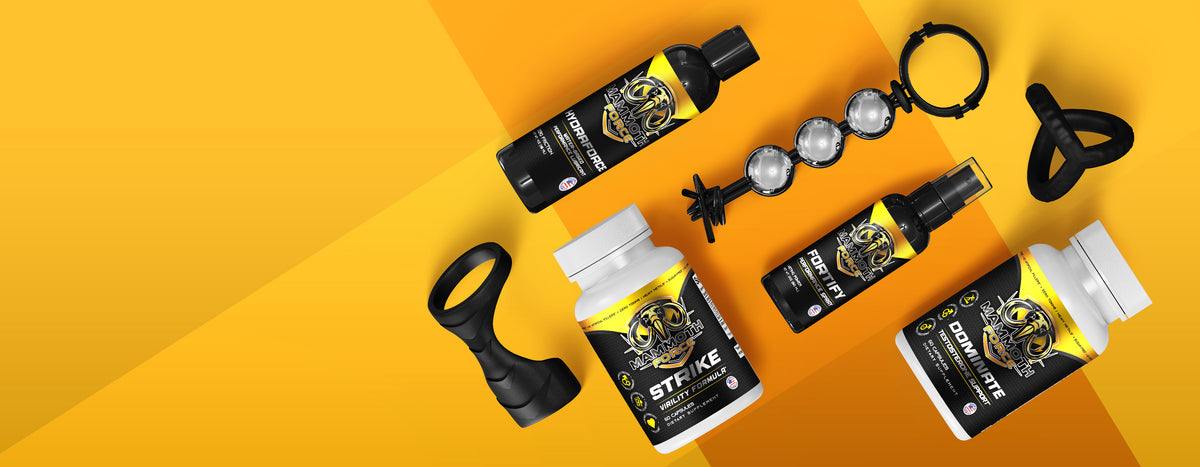
Silicone lubricant degrades silicone toys and rings on repeated contact. The surface goes tacky, then gummy, and ends up porous and impossible to clean properly, at which point the item is finished regardless of what it cost.
This is the one compatibility rule in the category that destroys something you already own, and it catches people who did everything else right. Every ring in the Mammoth Force lineup is silicone, and most sleeves and toys people own alongside them are too.
Why it happens
Both the lubricant and the toy are silicone-based polymers, and chemically similar materials interact rather than sitting politely side by side. The lubricant works its way into the surface of the toy instead of staying on top of it, and the toy’s surface layer swells and softens.
Water-based lube does not do this because there is nothing in it that the polymer wants. It sits on the surface, absorbs into skin, and evaporates.
The relevant detail for shopping is that “silicone lube” on a label is a marketing term and the ingredient list is the real information. Dimethicone, cyclomethicone, dimethiconol and anything else ending in -cone are silicone fluids. A hybrid lube with a small amount of dimethicone will do this slowly. A pure silicone lubricant will do it faster.
The timeline
| Stage | What you notice | Is it recoverable? |
|---|---|---|
| Fine | Smooth, slightly grippy when clean and dry | — |
| Early | Faintly tacky when clean and dry, sometimes a dull patch | Usually. Stop the exposure, wash and dry fully |
| Middle | Sticky to the touch, softer under pressure, may look blotchy | Partly. The surface will not fully recover |
| Late | Gummy, deformed, visibly degraded, picks up lint | No |
| Failed | Porous surface that cannot be cleaned | No. Replace it |
There is no fixed number of exposures that gets you from the first row to the last. It depends on how much silicone is in the lubricant, how long the contact lasts, and whether the item is washed and dried afterwards. One accidental use, washed off properly, is a non-event. Using silicone lube with a silicone ring every week for a couple of months is not.
The test
Wash the item, dry it completely, and run a dry finger across the surface.
Healthy silicone feels smooth with a slight grip and stays that way. Degraded silicone feels tacky when it should be dry, and the tackiness does not wash off because it is the surface itself rather than residue on top of it.
Once a surface is porous it holds bacteria below the level soap reaches. That is the stage to replace the item, and it is worth accepting rather than arguing with. A $39.99 ring is not worth keeping in that condition. How to clean silicone toys covers the routine that keeps a healthy one healthy.
The condom workaround
If you want silicone lube’s longevity with a silicone item, put a condom over the item. The barrier keeps the lubricant off the silicone entirely, and it works well enough that people use it deliberately rather than as a compromise.
Two notes on doing it properly. Use plenty of lube on the outside of the condom rather than only on the inside, or the friction defeats the point. And a condom over a ring is fine mechanically. The ring seats at the base and the condom rolls over it, or you put the condom on first and the ring over the top, which is easier to remove in a hurry.
Water-based lube is still simpler for most people most of the time.
What to do instead
Use water-based lube with anything silicone. That is the whole recommendation, and it costs nothing in practice because water-based reactivates with a few drops of water when it goes tacky.
Keep silicone lube for what it is genuinely better at: showers and baths, long high-friction sessions, and skin-only use with no toys in play. Both bases are safe with latex condoms, so that is not the deciding factor. Water-based vs silicone lube has the full comparison.

Mammoth Force
HydraForce Lubricant
4 oz water-based lube. Store says glycerin-free and silicone-safe.
4.6 from 15,000+ reviews
Free shipping over $50 • Discreet packaging • Ships from Huntington Beach, CA
HydraForce is the 4 oz lubricant in the lineup. Check the ingredient panel on the product page for the current base and full formulation, particularly if you are pairing it with silicone toys and want to be certain what you are putting on them.
Other materials
TPE and TPR sleeves. Not silicone, but generally porous by nature, and both bases are usually fine. Follow the manufacturer’s guidance, and treat these as replaceable items with a shorter life than silicone.
Metal, glass, ABS plastic. Non-reactive. Any lube works. We do not sell rigid rings in any material, because a ring that cannot be cut off in an emergency is the wrong trade. See silicone vs metal cock rings .
Latex. No oil, ever. Water-based and silicone are both fine. Lube and condom compatibility is the page for that one, and it is the rule with actual consequences.
Storage matters too
Silicone against silicone reacts slowly even without lubricant in the picture. Two silicone rings left touching in a drawer for a year can end up bonded or marked. Store silicone items separately, in cloth bags or individual compartments, dry and out of direct sunlight.
How the confusion happens
Nobody sets out to do this. Three routes account for most of it.
The lube was bought first. Silicone lubricant is genuinely excellent, someone recommends it, and then a silicone ring or sleeve arrives months later into a drawer that already has a bottle in it. There is no moment where the question comes up.
The product was a hybrid. The bottle says water-based on the front, the panel lists dimethicone halfway down, and the effect is the same in slow motion. Hybrids are the most common way people damage silicone without knowing they used silicone lube.
The toy’s material was unclear. Plenty of items are sold as silicone that are silicone blends, TPE, or unlabelled elastomer. Where the material is genuinely unknown, water-based is the safe assumption for the same reason it is the safe default everywhere else.
The practical defence against all three is a single bottle of water-based lube kept with the silicone items, and reading the panel rather than the front of anything new.
What to read next
- Water-based vs silicone lube
- How to clean silicone toys
- How to clean a cock ring
- The complete lube guide